
Steven Spielberg’s new film Disclosure Day is arriving at a moment when public interest in extraterrestrial life is at an all-time high. What was once confined largely to science fiction has steadily moved into mainstream conversation through congressional hearings, military testimony, the recent release of classified UFO/UAP videos, documentaries, and endless online discussion.
Whether we find the evidence compelling or remain skeptical, the cultural fascination is undeniable. Spielberg’s film appears poised to explore not simply the existence of extraterrestrial intelligence, but the profound consequences that would follow if humanity were suddenly confronted with confirmation that we are not alone.
What makes that premise so compelling is that it touches on questions that go far beyond science. A discovery of intelligent life elsewhere in the universe would force us to reconsider assumptions about our significance as humans, our purpose, and our identity. It would raise questions about where we fit in the grand story of creation. For Christians, those questions quickly become both theological and personal. Would the existence of extraterrestrial life somehow diminish humanity’s place in God’s purposes? Would it challenge the uniqueness of Jesus Christ? Would it require us to rethink the foundations of the Christian faith?
These concerns are understandable, but they may reveal something important about the way many of us have come to think about God. Often, when people imagine the possibility of intelligent life elsewhere, they assume that a larger universe somehow creates a smaller God. But the Bible consistently points us in the opposite direction. Scripture never presents God as a local deity whose authority is limited to one nation, one people, or just one planet. From Genesis to Revelation, God is revealed as the Creator and Sustainer of ALL things. The heavens declare His glory because they belong to Him. The stars are not competitors to His greatness; they are evidence of it.
Throughout history, humanity has repeatedly discovered that creation is larger than previously imagined. We learned that Earth was not the center of the solar system. Later, we learned that our solar system was only a tiny part of a vast galaxy. Then we discovered that our galaxy was one among billions. Every discovery expanded the scope of creation, yet none diminished the Creator. If anything, each discovery enlarged our appreciation for His power, wisdom, and majesty.
This is why Christians need not fear the questions raised by Disclosure, Day, be it a fictional film or a real-life event. The existence of other intelligent creatures would not challenge God’s sovereignty. It would simply reveal that His creative work is even more expansive than we previously understood. The real issue is not whether God could create life elsewhere; it’s whether we have unconsciously imagined a God too small to do so.
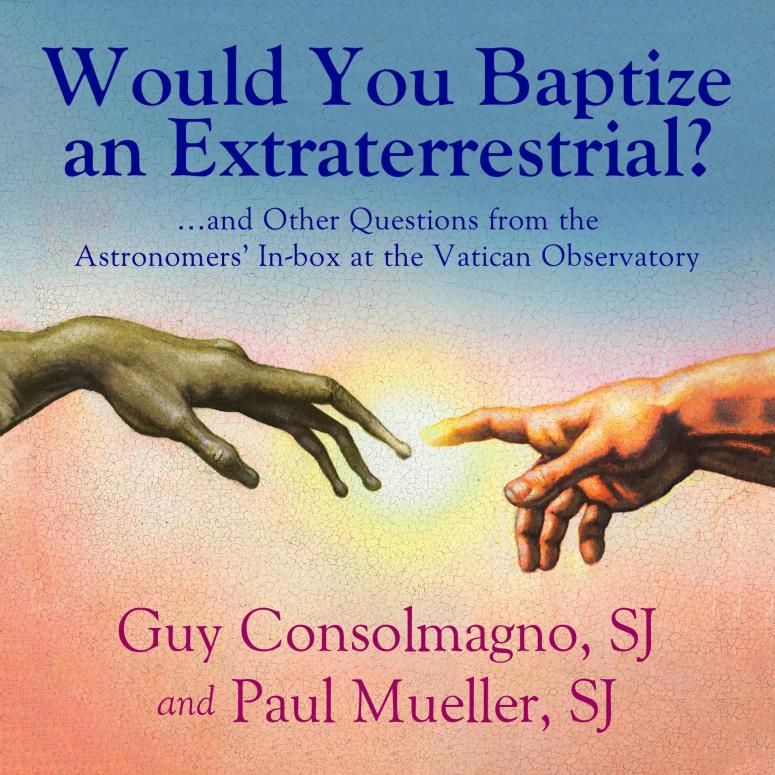
Vatican astronomers Brother Guy Consolmagno and Father Paul Mueller make this point beautifully in their book, Would You Baptize an Extraterrestrial? They argue that discoveries about the universe tend to challenge our assumptions about ourselves far more than they challenge our understanding of God. Their point is worthy of serious consideration. Perhaps the deepest theological question raised by extraterrestrial life is not whether God is capable of creating other worlds. Perhaps it is whether we have underestimated the scope of His creativity.
For Christians, the proper response to a larger universe has always been the same. It is not fear. It is worship. Every expansion of our understanding of creation ultimately invites us to stand in greater awe of the One who made it.
In part 2, I’ll get into why this is not a new conversation. In the meantime, I’m going to see the movie. Stay tuned, earthlings!

